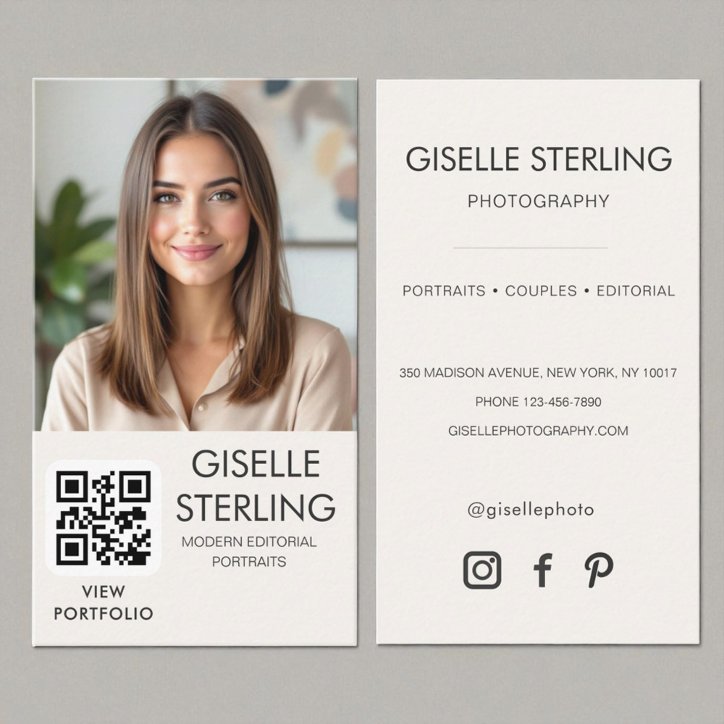
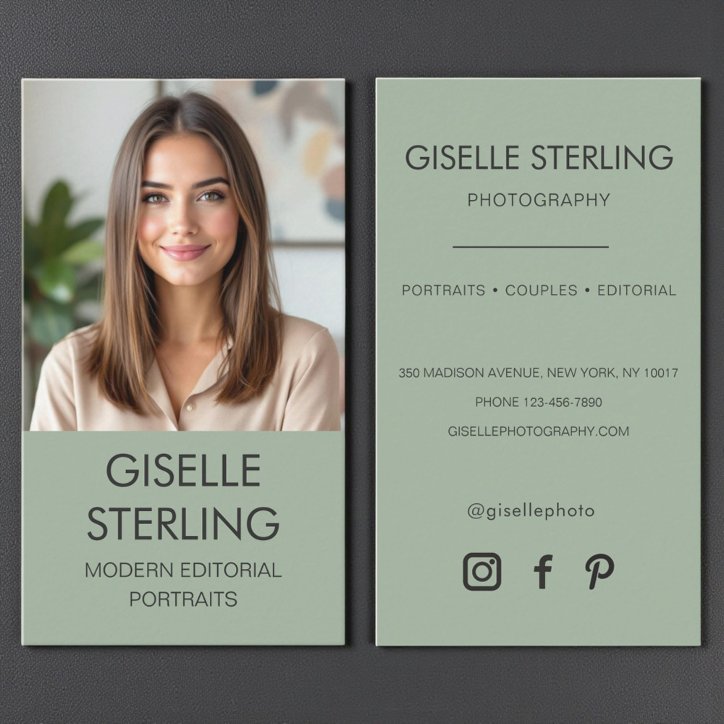
The short answer
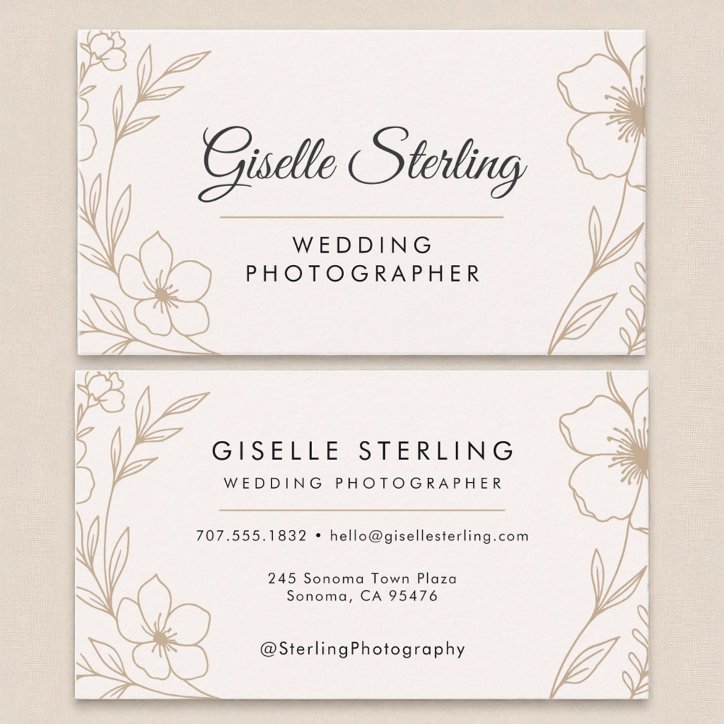
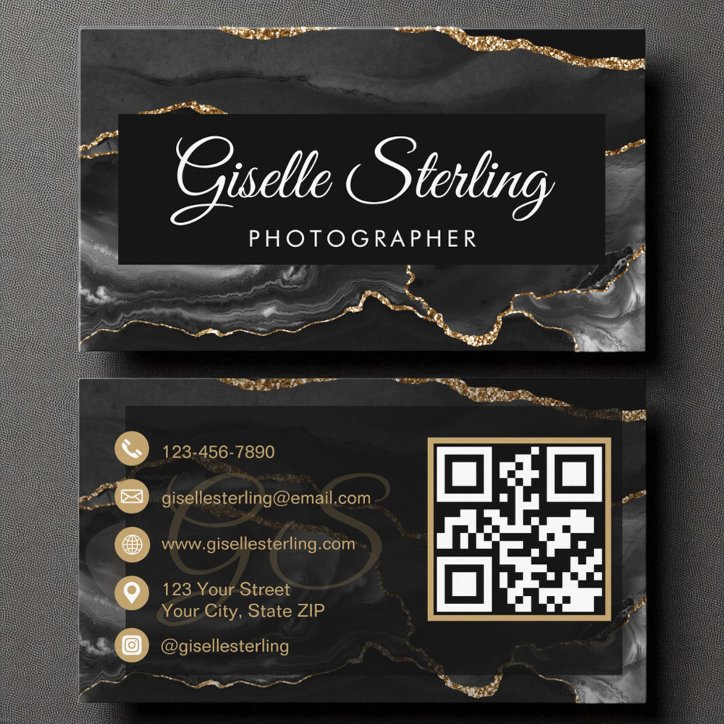
Include your name or studio, photography specialty, booking contact, website, social handle, and portfolio QR code.
Put the recognition details first
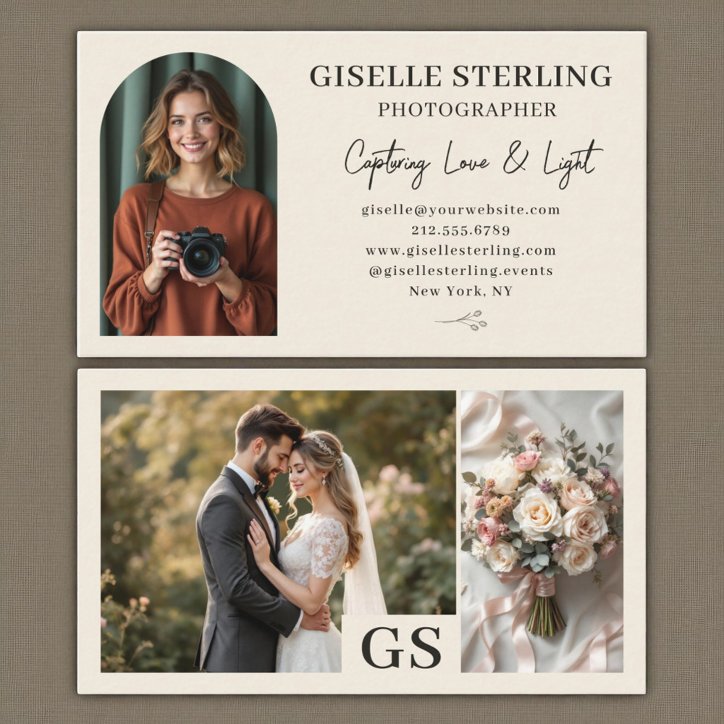
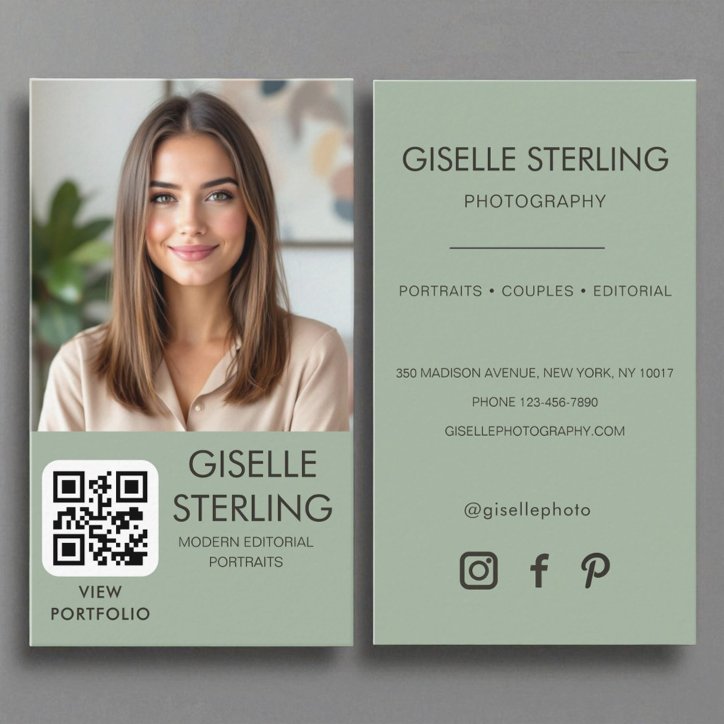
Choose one strong image or a clean logo-led design and use a QR code to remove friction between seeing the card and viewing your work.
A customer should be able to identify the photographer specialty and the preferred contact method in a quick glance. Company identity and role belong above secondary details.
- Name or company
- Professional role or specialty
- Primary contact path
- Location or service area when useful
Add services and trust details selectively
A short service list can help when photographer work includes clearly different specialties. Keep only the items that influence a buying decision. Credentials, licensing, insured status, or professional designations should appear only when current, accurate, and appropriate.
Move the next layer to the back
Use the reverse for a booking QR code, a short specialty list, appointment details, or a focused portfolio prompt. The front should still make sense by itself, and the back should help the customer book or inquire rather than repeat every front-side detail.