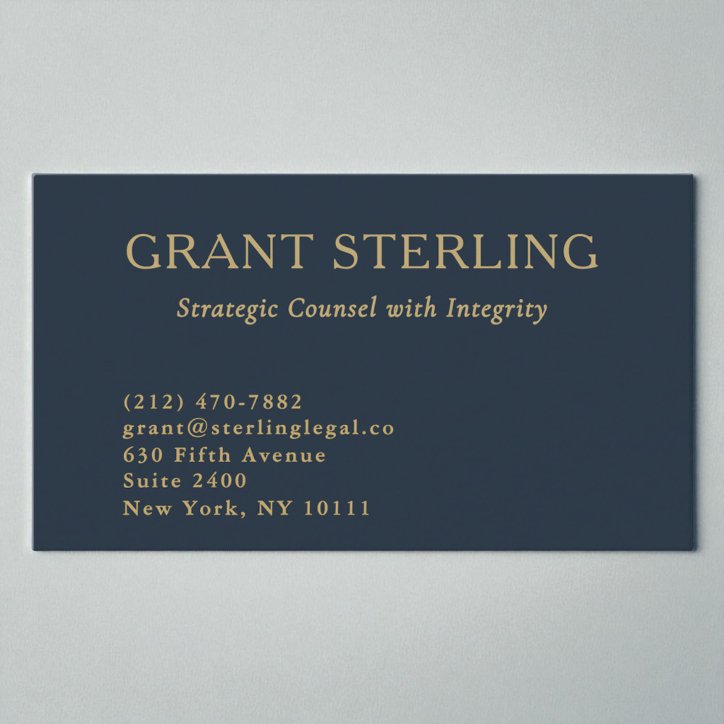
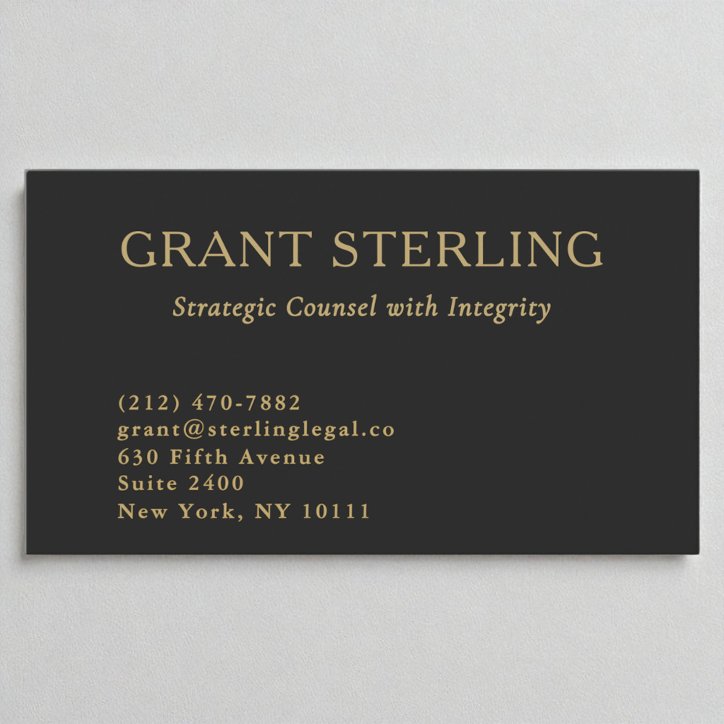
The short answer
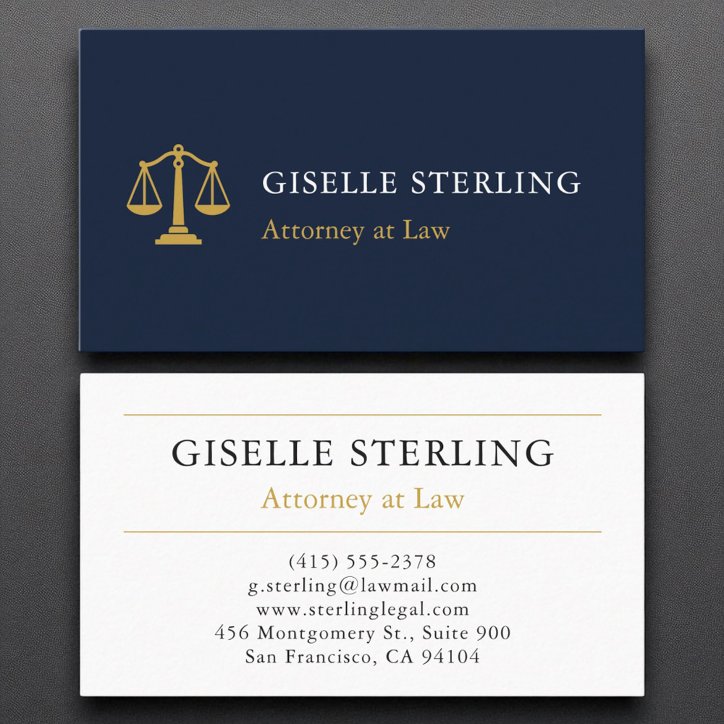
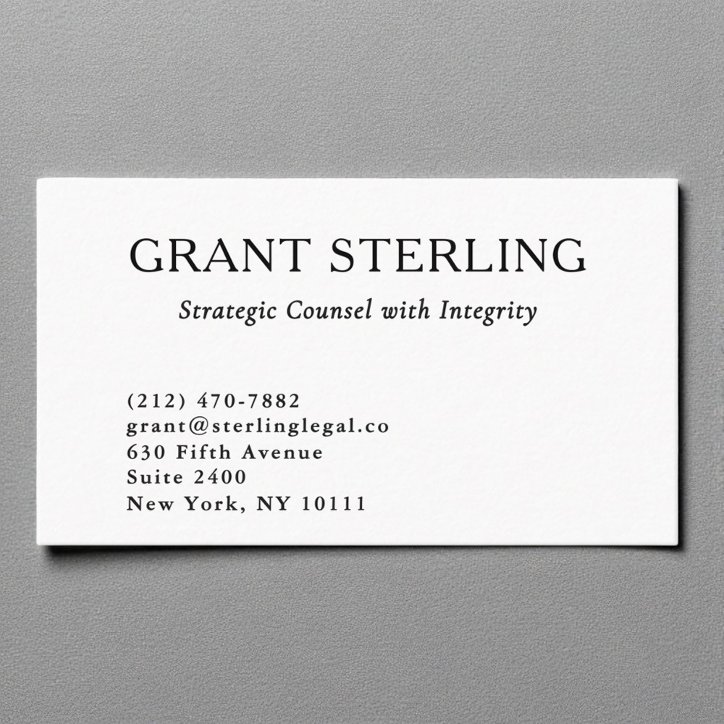
An attorney business card should prioritize the attorney’s name, professional title, firm, direct contact information, and website. Add a practice area or office location when it helps prospective clients understand the fit. Use credentials and jurisdiction wording accurately and follow applicable professional rules. Restrained typography, strong spacing, and high contrast usually communicate more authority than decorative legal imagery.
Make the professional identity unambiguous
The reader should see the attorney’s name, title, firm, and direct route to contact without decoding a complex layout. Practice areas can help when concise and accurate, but a long list belongs on the website.
- Attorney name and professional title
- Firm or practice name
- Direct phone and professional email
- Website and office location when useful
- Accurate jurisdiction or credential information where appropriate
Use visual restraint to support credibility
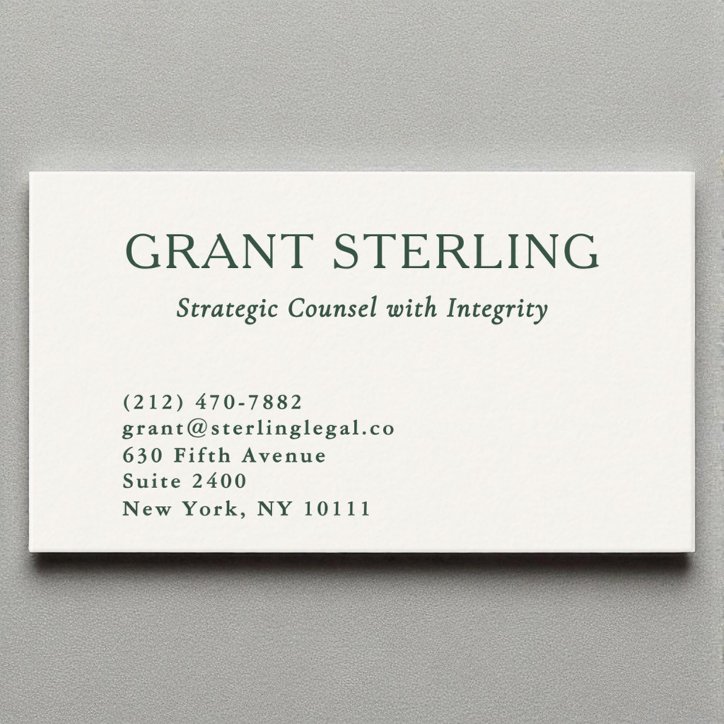
Black, navy, white, ivory, gold, silver, and copper-inspired palettes can all feel professional when contrast is strong. Scales of justice, columns, monograms, and line motifs should remain secondary to the name and title.
Use digital actions carefully
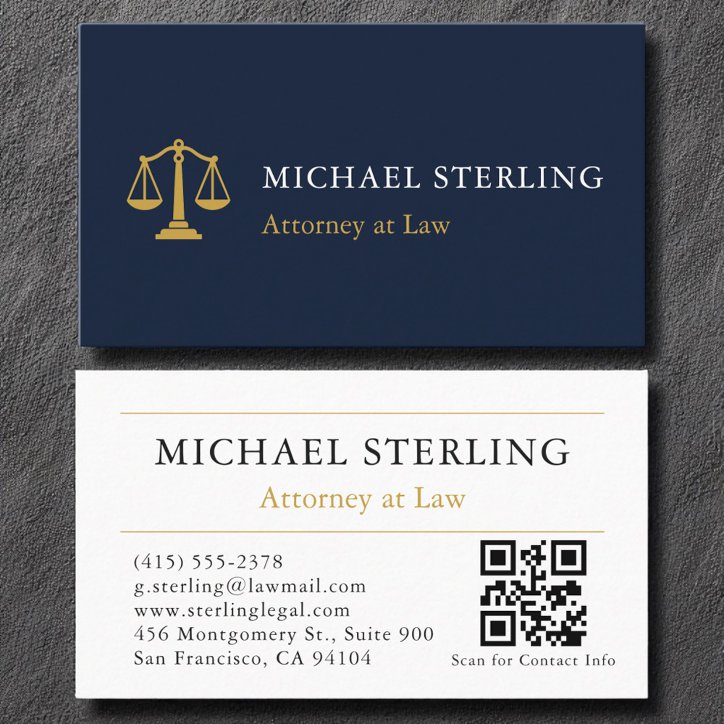
A QR code can open the firm website, consultation request, attorney profile, or contact-saving page. Avoid implying a client relationship or making promises on the card; use a clear, factual action and accurate destination.