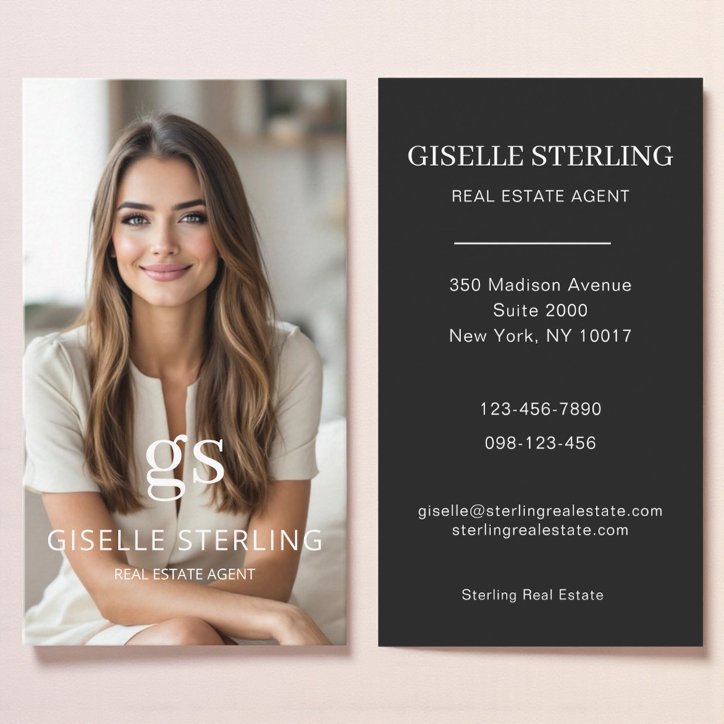
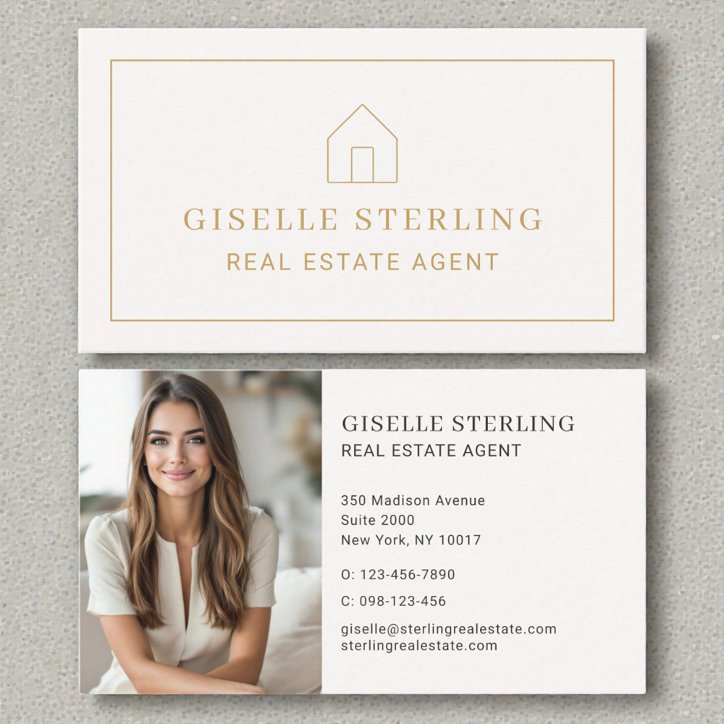
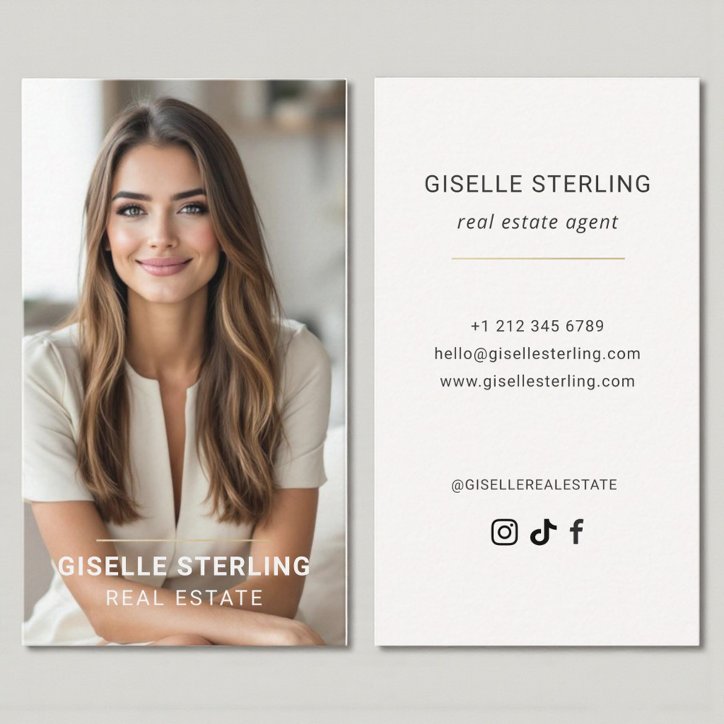
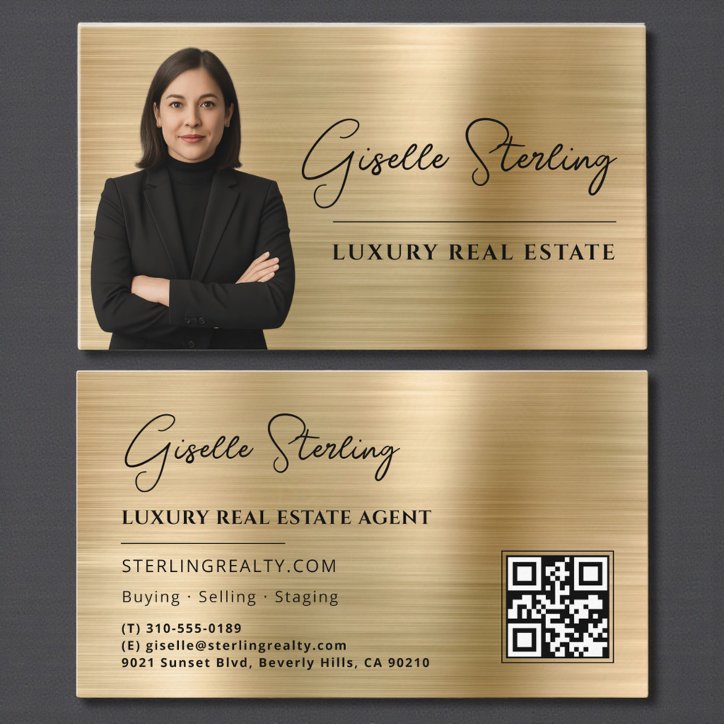
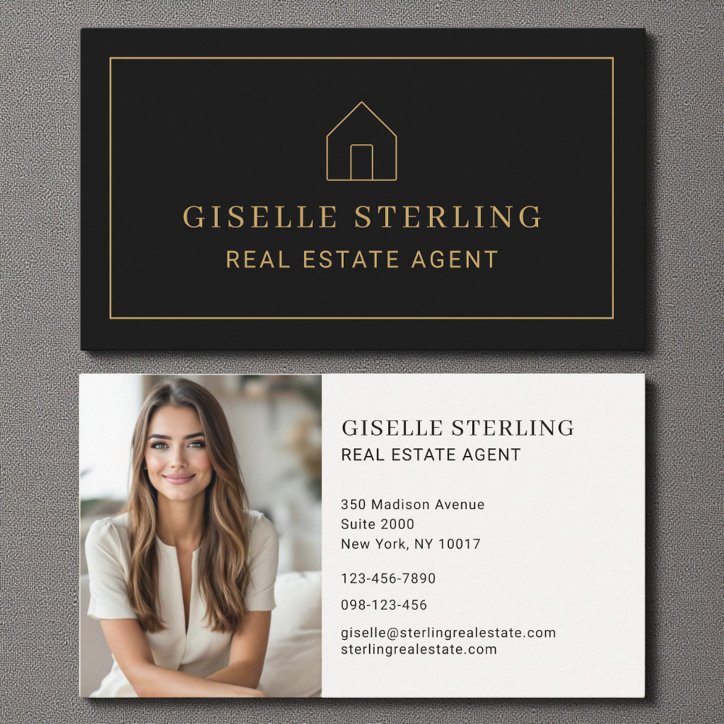
The short answer
A real-estate business card should help someone recognize the agent and reach the right next step. Use a current professional headshot when personal recognition matters, keep the name and role prominent, follow applicable brokerage and credential requirements, and provide a direct phone, email, and website. A QR code can open active listings, a home-valuation page, contact card, or appointment route.
Choose whether the agent or the brokerage leads
Independent recognition often supports referrals and open-house follow-up, while a brokerage-led layout can reinforce an established company. The hierarchy should be intentional and comply with applicable brand and professional requirements.
- Current professional name and role
- Brokerage or team identity where appropriate
- Direct phone and email
- Website or profile
- Accurate designation and license information when required
Use a headshot for recognition—not decoration
A well-lit, current portrait helps someone connect the card to the person they met. Use a natural crop with enough resolution and keep text away from the face. A logo-first card can be stronger when the team or brokerage identity is the primary asset.
Send the QR code to a useful real-estate action
A generic homepage may add another step. Consider a listings page, home-valuation request, consultation booking, saved contact, neighborhood guide, or focused agent profile. Keep a printed contact route available.