The short answer
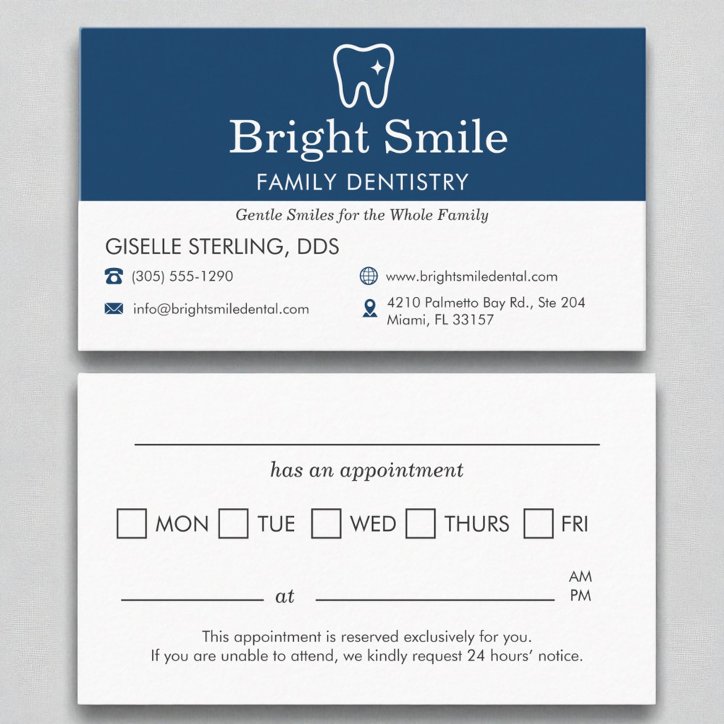
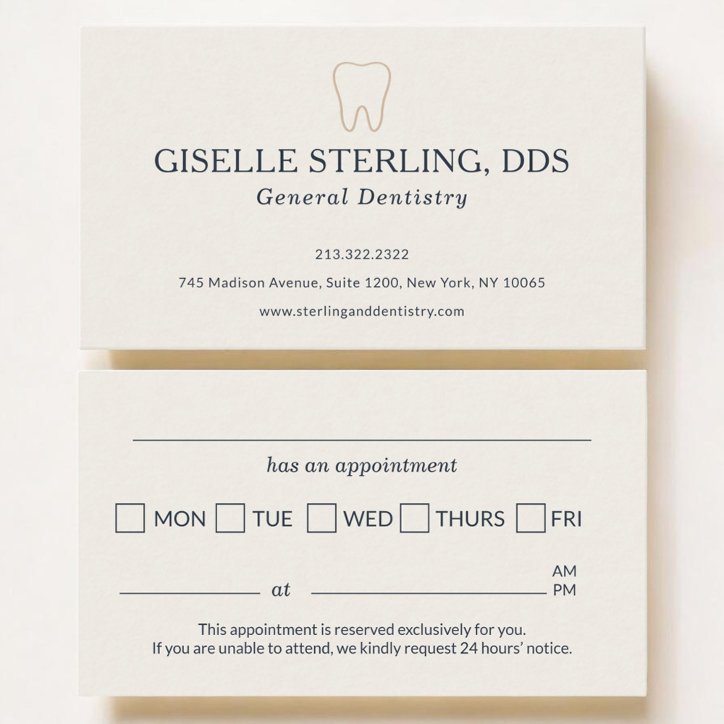
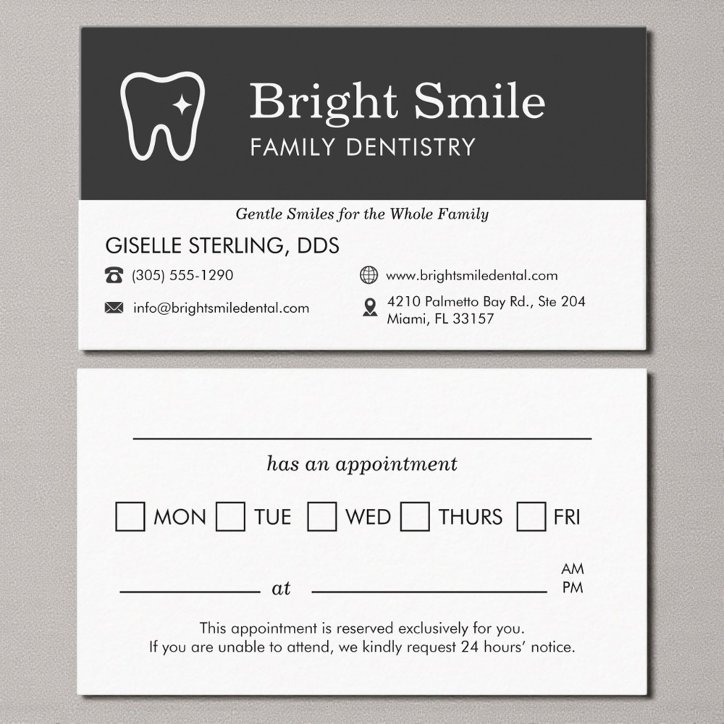
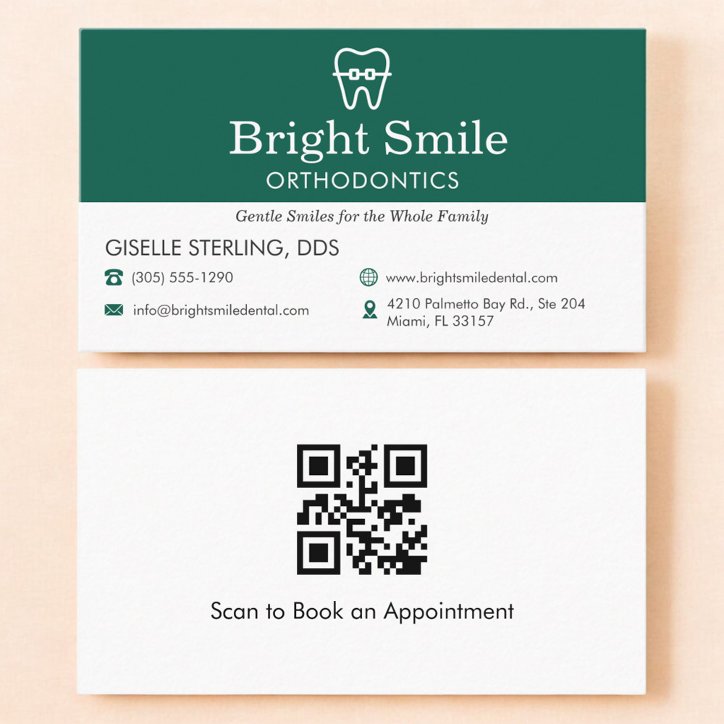
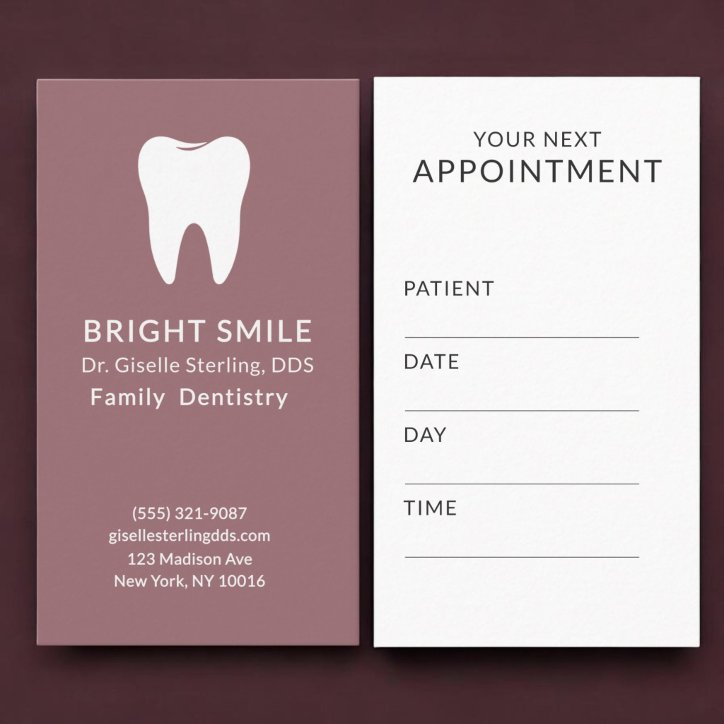
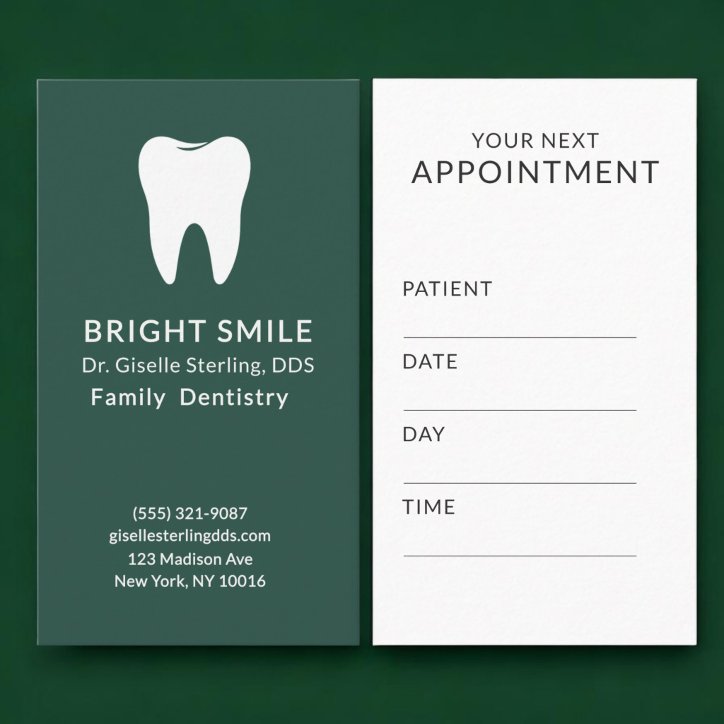
A dental business card should identify the dentist or practice, provide the office phone, website, address, and a clear appointment route. Use accurate professional credentials and practice information. When repeat visits matter, the back can become a writable appointment reminder. A QR code can open online scheduling, directions, patient information, or the practice contact page without replacing printed office details.
Separate provider identity from office action
The card should make it easy to identify the dentist or practice and contact the office. Long treatment lists are rarely necessary; a concise specialty or practice description can establish the fit.
- Dentist or practice name
- Accurate degree or professional designation
- Office phone and website
- Address and directions when patients visit
- Scheduling or patient-information route
Use the back as an appointment reminder
A combination card can support both introduction and repeat care. Keep date, time, provider, and office-contact fields large enough to write and read. Use a light, uncluttered background in the writing area.
Choose calm clarity over novelty
Blue, white, teal, green, navy, and warm neutrals can communicate cleanliness and trust, but no color is required. Tooth imagery can clarify the category when simplified. Avoid tiny light type and playful graphics that do not match the actual practice experience.