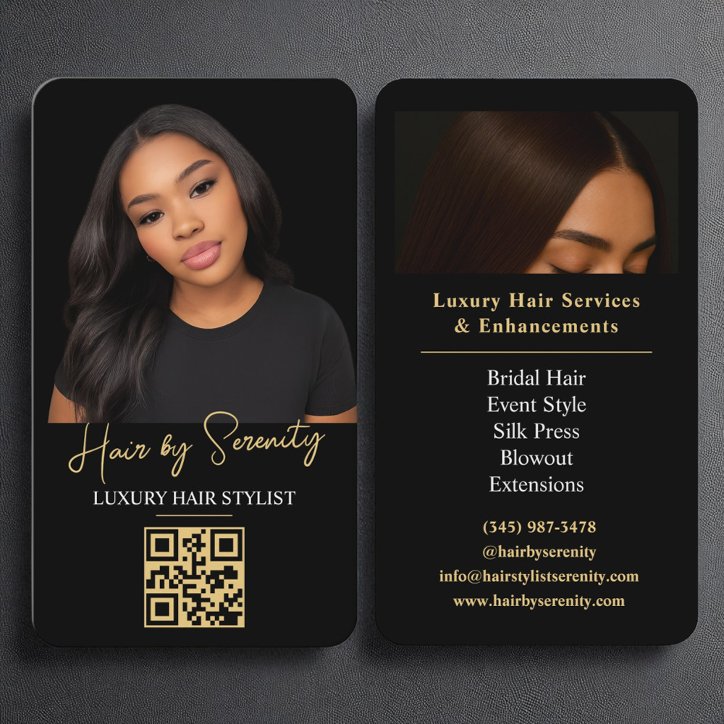
The short answer
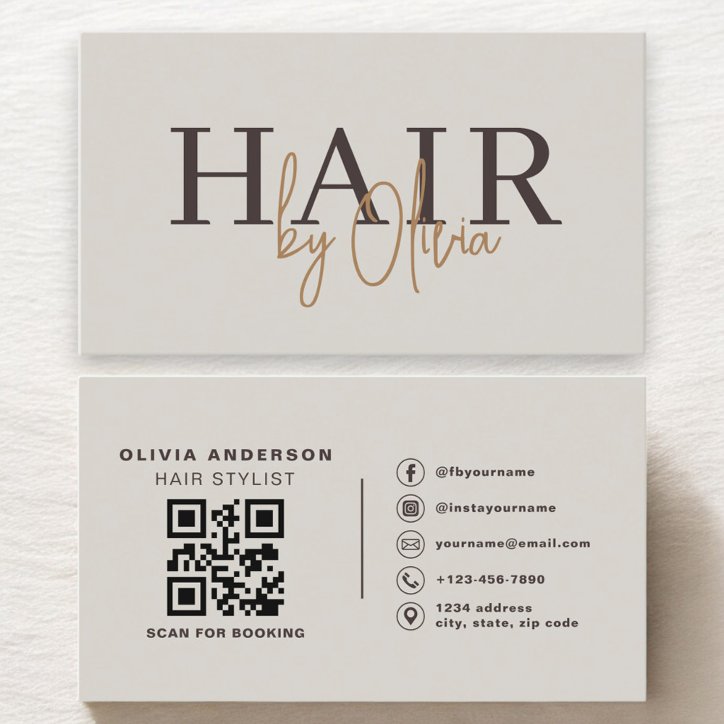
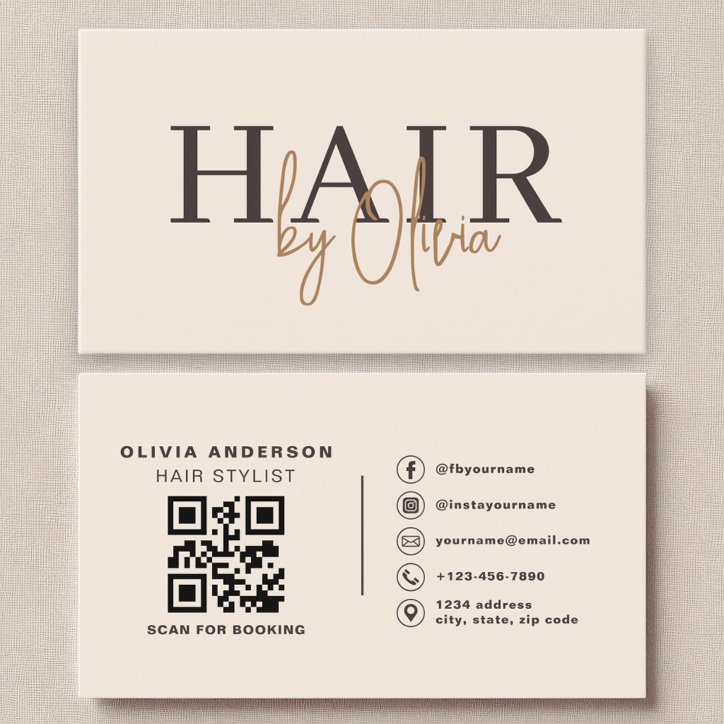
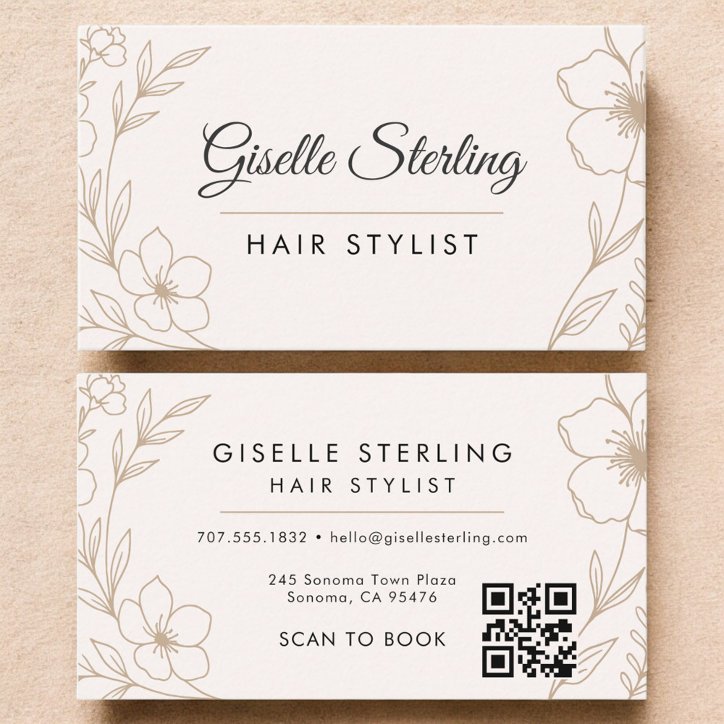
A hair-stylist business card should identify the stylist, salon or studio, specialty, location, and easiest booking route. Include a social handle when it functions as an active portfolio. A QR code can open scheduling, service information, or recent work. Choose a design that matches the actual salon experience—minimal, luxury, bold, editorial, or approachable—while keeping booking information unmistakable.
Lead with the stylist identity and specialty
Clients often choose both a person and a visual style. State the stylist name, salon or studio, and a useful specialty such as color, curls, extensions, bridal, barbering, or another accurate focus.
- Stylist and salon identity
- Primary specialty
- Booking phone or URL
- Location
- Active portfolio handle or QR destination
Make booking easier than browsing
A portfolio can build confidence, but the card should not make a ready client search through several profiles to find the booking link. Send the QR code directly to the preferred next step or use a maintained landing page with a clear booking action.
Match the card to the service experience
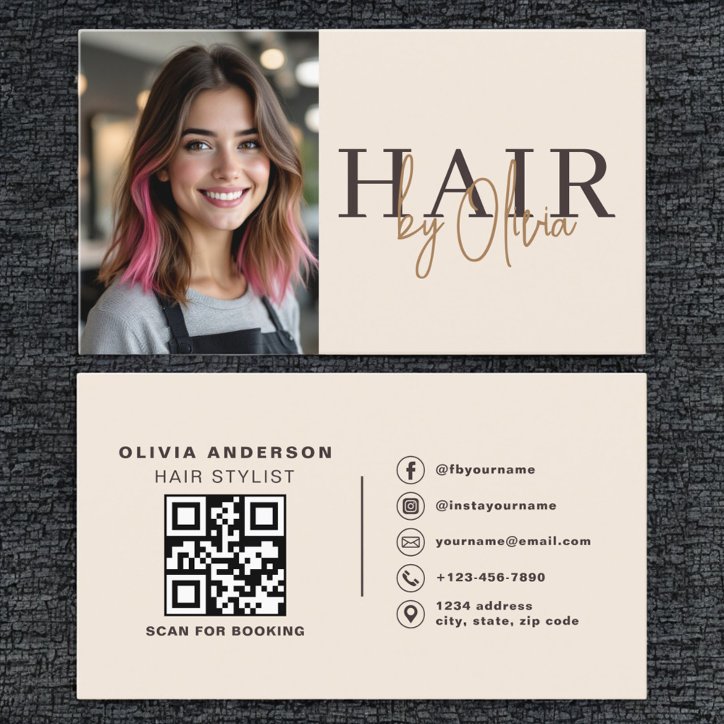
Blush, black, gold, neutral, sage, vivid color, and monochrome can all work. The best palette reflects the studio and clientele. Scissors, hair lines, portraits, monograms, and photography should support the brand rather than replace the specialty and booking details.